Sunday, March 10, 2013

Introduction

Hello readers, in this website you will be learning about composting! Here, you will learn about many key points and elements, multiple methods, and lots of helpful tips to go along with them.

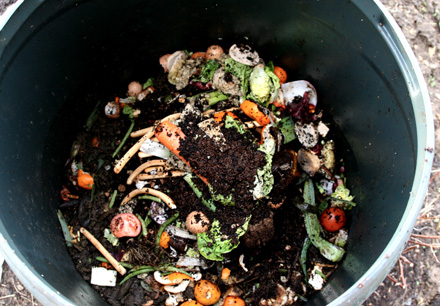
Composting is the process of recycling decomposed organic materials into a rich, fertile soil. When compost is added to the soil, the soil gains porosity, and attains a variety of nutrients. Adding nutrients to the soil makes plants have a more abundant food source and enables them to have a greater growth speed. Porosity allows the soil to hold more water and nutrients,and also allows air to pass into the soil. This guards against the rotting of root fungi, and provides the necessary oxygen to the roots and earthworms, allowing them to do their work on soil enhancement. As you can see, composting has alot of good effects and benefits.


Here are 5 other reasons on why you should compost:
  1. You will significantly reduce pest problems.
  2. Healthier plant have a much higher capability to fight off diseases ans pests/bugs.
  3. Compost fixes both sandy and clay type soils.
  4. Composting is more green and saves money- instead of buying fertilizers that later flow into streams and pollute.
  5. Feeding your plants with compost, will improve your own diet. Plants grown in nutrient-less soils are less healthy to eat.

Thursday, February 28, 2013

Materials Needed for Composting

Before we learn the different methods to compost, we first have to know what kind of materials we need to have. The 2 most important materials we need, are "green stuff" and "brown stuff". Believe it or not, "green stuff" and "brown stuff" are the scientific words describing two different types of material. 

Brown stuff is organic matter which is rich with carbon. The brown stuff, which is high in carbon, acts as the fiber during composting. It is basically dead material. Brown stuff is also the material we need most of during the composting process, but it is very easy to find Some examples of "brown stuff" are: dried leaves, pine needles, newspaper, and sawdust.

Green stuff is organic matter which is rich in nitrogen. While brown stuff is the most needed material in composting, green stuff is the least needed material. Also, Green Stuff is very hard to store, since they turn rotten over long periods of time. Some examples of Brown Stuff are: grass clippings, fruits, vegetables, coffee grounds, egg shells, horse manure, and left over food scraps.

Material to NOT Compost

While composting there are some  materials that you have to watch out for.  Using the wrong materials while composting, can result in many things, including attractions of pests. Here are some examples of materials not use during composting and how they affect your compost.

Bread related products- attracts unwanted pests
Cooking oil- also attract pests and animals
Glossy paper and magazines- does not breakdown and ads chemicals to your compost
Meat- compost becomes smelly and attracts bugs and animals.
Milk-also attracts pests while making compost smelly
Rice- allows bacteria to start growing in the compost pile or bin
Walnuts-makes soil toxic for some other plants
Paint- just doesn't belong in the garden
Acidic fruits like Citrus fruit- highest pH level of soil.
Animal or human waste- negatively affects health of surroundings.

Tuesday, February 26, 2013

Types of Composting

The following is what methods of composting your going to learn:

1. Vermicomposting
2. Trenchvomposting

Tuesday, January 15, 2013

Vermicomposting

Vermicomposting (the Latin word vermi means worm) is one of  the most fastest composting methods out there. It's because this method includes the use of worms which speeds up the decomposition procces. The worms "eat" the material in your compost and poop it out as "castings". Castings are technically the worm's outer layer of skin, but it is made up of the composting material the worms ate. The castings/ left-over-skin breaks down into nutritious soil in a couple of days.

When vermicomposting, you should use at least a pound of worms for any amount of composting material. You should supply a good amount of Eisenia fetida also known as red wrigglers. These are the type of worms, that help break down your compost the fastest.

TIPS

 - During the composting procedure, put some apple peels or left over kitchen scraps in to your compost bin. This helps keep the worms "fed".
- Make sure you spray some water over the compost bin time to time. This helps prevent the compost from drying up.
-Turn the pile to let oxygen circulate throughout the compost pile/bin. This helps the worms stay alive.